 gb
gb
 Italy
Italy France
 Spain
Spain Portugal
 Poland
 Bulgaria
 Czech republic
 Slovakia
 Romania
 Turkey
 Lithuania
 Germany
 Montenegro
 Netherlands
 Serbia
 Switzerland
 Croatia
 Hungary
 Luxembourg
 Ireland
 Norway
 Denmark
 Brazil
 Argentina
 Colombia
 India
India China
China Hong Kong (China)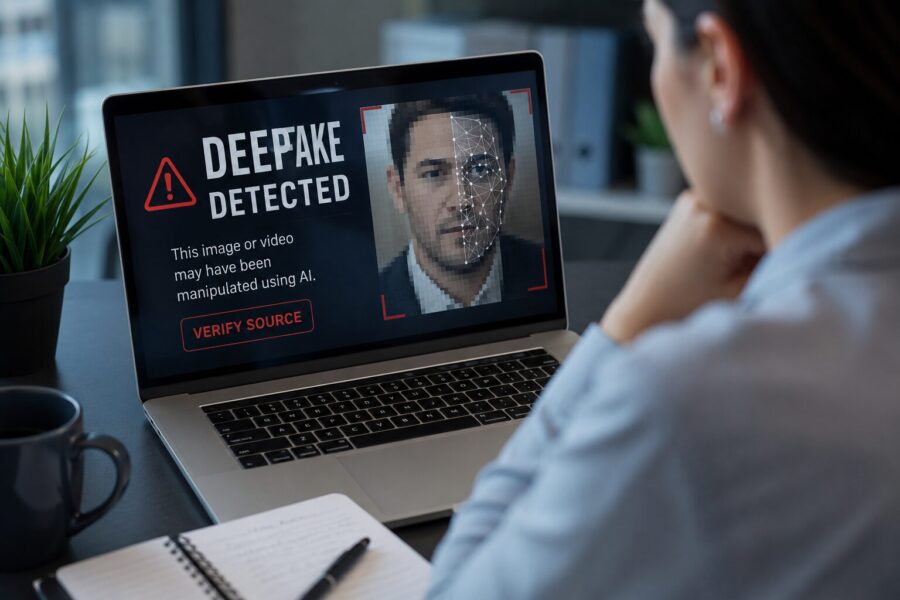
As artificial intelligence continues to develop, deepfake scams are becoming a growing concern for recruiters and HR teams.
Deepfakes use AI to create realistic but fake images, videos or audio recordings. They can make it look or sound as though a person has said or done something that never happened.
While some synthetic media has been used for entertainment, deepfakes also raise serious ethical, security and reputational risks. In recruitment and HR, those risks can become especially sensitive.
Rebecca Napier, IT Business Partner at Gi Group, has warned that employers can no longer assume everything they see online is real.
Grok AI controversy highlights deepfake risks
Deepfake concerns have grown following recent headlines about X and its AI feature, Grok.
Ofcom has confirmed it launched a formal investigation into X after reports that the Grok AI chatbot account on X had been used to create and share demeaning sexual deepfakes of real people, including children.
The European Commission also launched an investigation into X in January 2026.
Rebecca said:
“The recent headlines around Grok AI being used to generate inappropriate deepfakes should set off alarm bells for those in recruitment and HR teams.

“We’re now in an era where we can no longer assume that what we see online is real.
“HR teams and recruiters need to be alert to this when it comes to matters of the workplace and codes of conduct.
“Often, these issues are much more complex and sensitive than they first appear.”
Why deepfakes matter in recruitment
Deepfake technology is becoming easier to access.
Research by Crest Advisory, commissioned by the Office of the Police Chief Scientific Adviser, found that 67% of respondents had seen, or thought they may have seen, a deepfake.
The UK Government has also warned about the scale of the issue. It estimated that 8 million deepfakes were shared in 2025, up from 500,000 in 2023.
For recruiters and HR teams, this creates a new layer of risk.
Rebecca continued:
“The growing accessibility of deepfake technology is particularly worrying.
“From an IT perspective, the potential impact on recruitment and HR processes is huge.
“Deepfakes can impersonate candidates during virtual interviews, fake employee misconduct or manipulate internal communications.
“As AI capabilities continue to evolve, the opportunities for reputational damage and fraud will only increase.”
Social media checks need extra care
Recruiters and HR teams may sometimes review a candidate’s online presence as part of the hiring process.
This might include looking at public social media content to understand how someone communicates, engages with others or presents themselves online.
However, deepfakes make this process more complicated.
Rebecca said:
“During the recruitment process, HR personnel, recruiters, team heads or potential line managers may review a candidate’s social media.
“They may do this to get a deeper sense of their authentic thoughts and feelings, as well as the language they use and how they engage with others.
“However, because deepfakes are becoming more common, recruiters need to use extra vigilance.”
How to spot possible AI-generated video
Deepfake videos are becoming more convincing. However, there are still warning signs that recruiters can look for.
Rebecca recommends watching for unusual details in video content. These can include unnatural eye movement, blurred facial features, poor lip-syncing or inconsistent lighting.
Recruiters should also pay attention to anything that feels out of character, out of context or unusually difficult to verify.
Rebecca said:
“When assessing video content, it’s important to look for common warning signs.
“These include unnatural eye movement, blurred facial features, poor lip-syncing or inconsistent lighting.
“Beyond this, organisations should consider stronger identity verification measures during online interviews and internal calls.
“This can reduce the risk of impersonation.”
Building stronger deepfake policies
Deepfake detection tools can add an extra layer of protection.
However, technology alone should not replace clear internal processes. Businesses also need practical policies that explain how teams should respond to suspected deepfake incidents.
This matters because false or manipulated content can affect hiring decisions, workplace investigations and employee trust.
Rebecca added:
“There are deepfake detection tools available, which can add an extra layer of protection.
“As incidents like those linked to Grok show, deepfakes are a very real issue.
“Businesses need to get policies in place now for how to approach potential deepfake incidents.”
Protecting trust in recruitment
Deepfake scams are likely to become a bigger challenge as AI tools continue to improve.
For recruiters, the key is not to panic. Instead, teams should combine awareness, verification and clear processes.
By staying alert to deepfake risks, HR and recruitment teams can protect candidates, employees and businesses. They can also make better decisions in a digital world where seeing is no longer always believing.